
The Spice Must Flow
What Dune Gets Right About the Next Oil Crisis

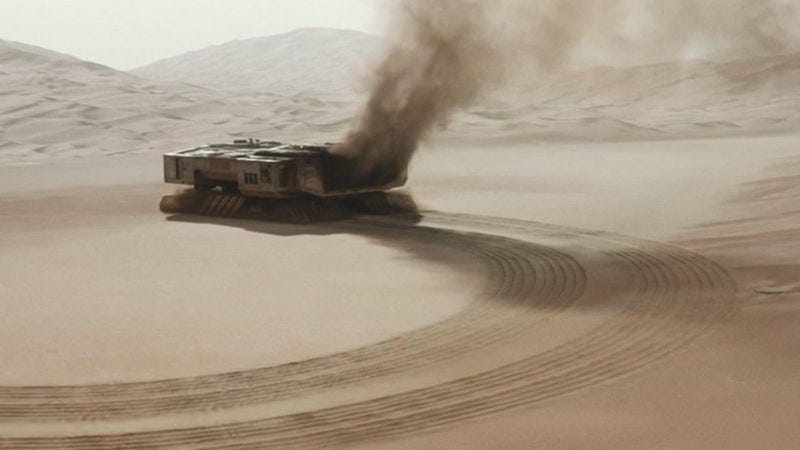
The Spice Must Flow: What Dune Gets Right About the Oil Crisis Happening Right Now
Frank Herbert wrote Dune in 1965, and most people think he wrote a science fiction novel about a chosen one, a desert planet, and giant sandworms. He wrote a geopolitical manual disguised as a hero’s journey. And right now, sixty years later, his nightmare scenario is playing out in real time.
On February 28th 2026, the United States and Israel launched coordinated strikes on Iran, including the assassination of Supreme Leader Ali Khamenei. Iran’s response was to do the one thing that every energy analyst has warned about for decades... close the Strait of Hormuz. Tanker traffic dropped 70% overnight. Brent crude blew past $100 a barrel for the first time in four years, peaking at $126. The IEA called it the greatest global energy security challenge in history. Sri Lanka moved to a four-day work week to conserve fuel. Hundreds of tankers sat idle on both sides of the strait, going nowhere.
If you’ve read Dune, actually read it, not just watched the Villeneuve films, you’ve seen this before. Herbert didn’t imagine a fictional universe, he reverse-engineered ours.
To be clear, I’m not saying Herbert was a prophet or that Dune is a prediction. What I’m saying is that Herbert identified the structural logic of resource chokepoint warfare in 1965, and that logic is now playing out with eerie precision. The parallels aren’t coincidence, they’re the result of a novelist who understood systems better than most analysts.
Arrakis is the Middle East. Spice is oil. The Fremen are Iran, and as of mid-March 2026, the jihad is underway.
The Chokepoint That Runs the World
The entire economy of Herbert’s universe runs on a single substance, spice melange, found on a single planet. Control Arrakis and you control interstellar travel, commerce, everything. The great houses, the Emperor, the Spacing Guild, they all orbit the same dependency. No spice, no civilisation.
The Strait of Hormuz is the real-world Arrakis. About 20 million barrels of oil pass through it every day, roughly 20% of global petroleum consumption. Saudi Arabia and the UAE have pipeline infrastructure that can bypass the strait, but total bypass capacity sits at roughly 2.6 million barrels per day, about 13% of normal flows. It’s a band-aid on a severed artery. Around 84% of the crude flowing through the strait heads to Asian markets, with China alone receiving nearly 38% of total flows. Add in about a fifth of global LNG trade and you start to understand why one narrow corridor between Iran and Oman basically holds the global economy hostage.
Herbert understood something that most people still don’t, and that policymakers clearly didn’t understand when they launched strikes on February 28th. You don’t need to be the most powerful player in the system, you don’t need the biggest fleet or the most advanced technology. You just need to sit on the chokepoint and be willing to threaten the flow. The Fremen didn’t have a space fleet. Iran doesn’t need aircraft carriers.
The IRGC’s statement from earlier this month put it in terms Herbert would have recognised instantly... “You will not be able to artificially lower the price of oil.”
The spice must flow, and that line reads very differently in March 2026 than it did in 1965. We just found out what happens when someone calls the bluff.
Iran as the Fremen
The Fremen have lived on Arrakis for generations, surviving in conditions that would kill anyone else. Every imperial power that tried to control the planet either failed or relied on brutality to maintain a fragile grip. The Harkonnens ruled through fear and extraction, the Emperor used them as a counterweight, and nobody really bothered to understand the Fremen as anything other than a nuisance... a primitive people sitting on top of something valuable.
Iran has occupied the northern shore of Hormuz for millennia. Western powers have spent the better part of a century treating the region as a resource to be managed, a chessboard where the pieces don’t get a vote. The asymmetric military capability Iran has built, fast attack boats, anti-ship missiles, drone swarms, mine warfare, is the modern equivalent of Fremen desert warfare. It doesn’t look impressive on paper next to a US carrier group, just like crysknife-wielding guerrillas don’t look impressive next to Sardaukar legions. But we just watched more than 20 confirmed attacks on merchant ships in under two weeks. The home team knows the terrain.
Herbert went deeper than just military asymmetry though. He invented the Missionaria Protectiva, a programme run by the Bene Gesserit to plant messianic prophecies among populations across the universe, decades or centuries before anyone would need to exploit them. The whole point was to seed narratives strategically, plant beliefs that could be harvested later by whoever needed them. Which is indeed the history of Western interference in Iran.
In 1953, the CIA and MI6 orchestrated a coup against Iran’s democratically elected Prime Minister, Mohammad Mosaddegh, over oil nationalisation. They installed the Shah, a Western-friendly autocrat who modernised the surface while brutalising the population underneath. For twenty-six years Western powers thought they had it managed, they’d installed their chosen one, redirected the resources, planted their narrative. Then 1979 happened, and the revolutionary energy that had been building for decades erupted in a way that nobody in Washington or London anticipated. The West’s Missionaria Protectiva blew up in its face.
Now the Fremen parallel does break down in important ways, and acknowledging that makes the real situation scarier. The Fremen were stateless, factionally united, and had zero power projection beyond Arrakis. Iran is a nation-state with formal institutions, diplomatic relationships, internal factions (reformists, hardliners, IRGC), a population that has staged multiple uprisings against its own government, and a regional proxy network that extends across the entire Middle East. We’ve just watched Houthi, Hezbollah, and Iraqi militia elements all activate simultaneously. The Fremen needed Paul to unleash their power. Iran has been projecting power independently for decades, and the network is already live.
The Jihad Is Not a Metaphor Anymore
This is the part of Dune that most fans either miss or just misunderstand, and it’s the part that should keep you up at night given what’s happening right now.
Paul Atreides has prescient visions that show him every possible path forward, and on almost every one, a galactic jihad is waiting. Billions dead, worlds burned, entire civilisations wiped out in a holy war fought in his name that consumes everything it touches. He spends the entire story trying to find the narrow path that avoids it while still saving himself and the people he loves, and he can’t. The messianic energy he’s riding, the Fremen belief in the Lisan al-Gaib, the momentum of a people oppressed for generations who finally have a leader promising liberation... it’s bigger than him. Once it’s unleashed, it has its own logic and its own hunger.
There’s no clean Paul equivalent in the real world, and that’s actually the point. The escalation dynamic doesn’t need a charismatic chosen one to trigger it. The system was primed. Multiple actors, the US, Iran, Israel, Saudi Arabia, and China as the single largest recipient of oil through the strait, all making moves that constrained each other’s options. Nobody needed to be Paul. The structural conditions generated the nightmare on their own.
We had a preview with the Houthis, and we should have paid more attention. From late 2023, Houthi attacks on Red Sea shipping disrupted roughly $1 trillion in goods over seven months. Container ship transits through the Suez Canal dropped 90%. Freight rates between Shanghai and Rotterdam jumped 80%, adding an extra $15-20 billion in annual costs to global trade. And that was a proxy action, not even a direct Iranian operation.
And then there was Abqaiq in 2019, which nobody took seriously enough. Drone and cruise missile strikes hit Saudi Aramco’s processing facility and the Khurais oil field, knocking out roughly 5.7 million barrels per day, more than half of Saudi output. Oil prices spiked 15% overnight. That happened during peacetime, with no military confrontation, and it showed exactly how vulnerable concentrated energy infrastructure really is.
Those were the tremors before the earthquake. The jihad Paul saw coming, the one he couldn’t prevent because the momentum was already too great... that’s what started on February 28th. The IRGC broadcasting that ship passages through Hormuz are “not allowed.” Brent crude at $126. The IEA’s emergency reserve release of 400 million barrels, which sounds massive until you realise it covers about 20 days of normal Hormuz flows or four days of global consumption. Sri Lanka rationing fuel. Japan releasing its own reserves because 70% of its oil imports come through the strait.
Paul’s lesson, the one Herbert was trying to teach, is that escalatory systems don’t respect anyone’s intention to keep things “limited.” Nobody gets to decide this stays contained.
The Family Atomics
Most people skip over the family atomics when they talk about Dune parallels, and it might be the most important one.
House Atreides possesses nuclear weapons, the family atomics. Paul uses them, deploying the atomics to blast open the Shield Wall and allow his Fremen forces to attack Arrakeen. It works tactically, but it crosses a line that changes everything about the political order. The atomics were a deterrent until they weren’t. Once used, the rules of the game changed permanently.
Iran’s nuclear programme follows the same logic. A capability that hasn’t been fully weaponised but fundamentally reshapes the strategic calculus just by existing. And the current escalation is exactly the kind of pressure that could push Iran from threshold capability toward actual weaponisation, or worse. If the strikes that killed Khamenei were meant to weaken Iran’s resolve, the early evidence suggests they’ve done the opposite. Mojtaba Khamenei, the new Supreme Leader, vowed to keep the strait closed. The IRGC warned of $200 oil.
Paul used the atomics because the cost of not using them was extinction. Iran is making the same calculation with Hormuz, the closure isn’t aggression for its own sake, it’s existential leverage because the alternative is absorbing strikes without response and accepting regime destruction. When the choice is between crossing the line and ceasing to exist, the line gets crossed, and Paul knew it, and Iran knows it now.
Paul Wins, Everyone Loses
Paul defeats the Harkonnens, overthrows the Emperor, takes the throne, unites the Fremen and leads them to absolute victory. And the jihad happens anyway, his Fremen armies sweeping across the known universe, killing billions in his name. Paul sits on the throne of the galaxy and watches it happen. He set it in motion and he can’t stop it.
Herbert wasn’t writing a triumph, he was writing a tragedy. The whole point was to demolish the myth of the clean victory, the idea that you can wield enormous destructive force in pursuit of a strategic objective and somehow contain the consequences.
We’re watching the real-world version unfold in real time. Coalition strikes hit more than 90 targets on Kharg Island, the strait closed, oil hit $126, Iraq and Kuwait started shutting in production because they had nowhere to send it, refineries across the Gulf shuttered. The spare capacity that OPEC normally uses to stabilise markets is physically trapped on the wrong side of the chokepoint. The G7 scrambled for an emergency call. And the cascade is still going... energy prices driving up food costs, which drives inflation, which drives political instability in import-dependent developing economies.
Herbert made the jihad death toll obscene on purpose, billions dead across the known universe. He wanted you to understand that “winning” can be the worst possible outcome. The Harkonnens lost, the Emperor lost, but the Fremen victory was indistinguishable from catastrophe.
Right now, nobody is winning at Hormuz, and Herbert would tell you that’s exactly how it was always going to go.
Herbert Was Writing a Risk Assessment
Frank Herbert didn’t predict Iran, or Hormuz, or the specific events of February 2026. What he nailed was the underlying logic, and the logic is airtight.
Systems built on single points of failure are inherently fragile, and they don’t become less fragile just because everyone agrees the resource is important. Populations sitting on strategic chokepoints will eventually use that position, regardless of how many times outside powers dismiss them as manageable. Revolutionary movements, once set in motion, obey their own dynamics... they can’t be controlled by the people who think they’re in charge. And the myth of the surgical, contained, controllable use of overwhelming force is just that, a myth.
The obvious counter-argument is that Dune’s universe had no spice alternative, and the real world does. Renewables, nuclear, electrification, they’re all accelerating. But that transition is measured in decades, not weeks, and the crisis is happening now. Global infrastructure is still locked into oil dependency, supply chains still run on diesel, petrochemicals still underpin everything from fertiliser to plastics, and the 20 million barrels a day that normally flow through Hormuz don’t have a green substitute waiting in the wings. Herbert’s lesson holds for as long as the dependency holds, and in March 2026, the dependency is total.
Herbert published Dune in 1965. He looked at oil, the Middle East, the resource dependency, the messianic cultures, the imperial arrogance, and he wrote a 500-page warning. We turned it into a blockbuster, bought the popcorn, admired the sandworms, and learned nothing.
The spice must flow, and right now it isn’t, and nobody who actually read the book should be surprised.
For real-time geopolitical risk analysis and forecasting on the Hormuz crisis, energy supply disruption, and escalation scenarios, visit NexusHQ.
Disclosure: the author holds positions in energy and commodities aligned to the thesis described in this article.