
The Fermi Fallacy
We searched a hot tub and declared the ocean empty

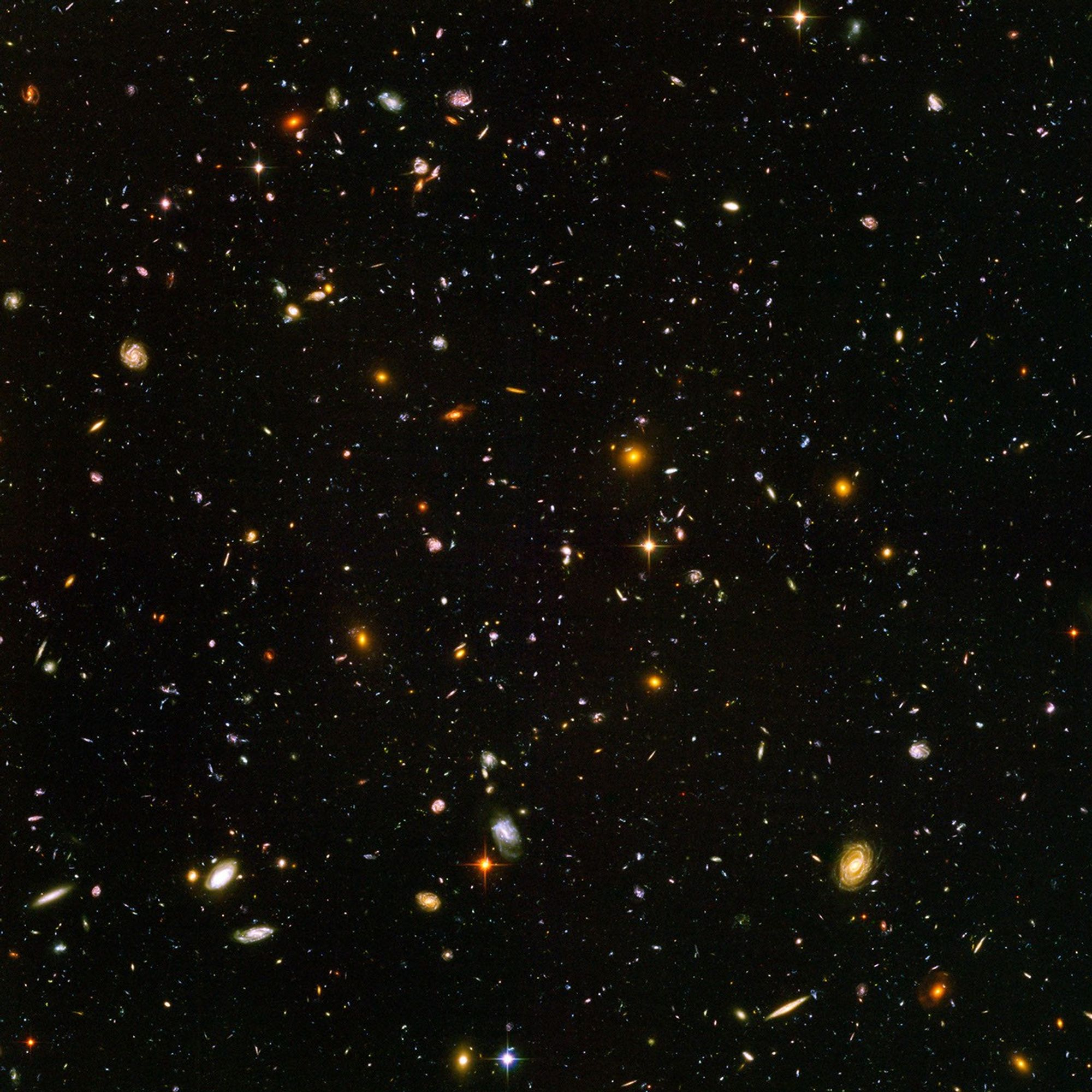
We’ve spent sixty years searching for extraterrestrial intelligence and found nothing. From that, we’ve concluded we might be alone in the universe. In 2018, a team at Penn State calculated exactly how much of the searchable cosmos we’ve actually covered: the equivalent of a hot tub’s worth of water out of all the Earth’s oceans. We checked a hot tub and concluded the ocean has no fish.
That’s the Fermi Paradox in practice. It asks: given the size and age of the universe, why haven’t we found anyone? And for decades, serious people have treated the silence as evidence. But the paradox only works if you accept a set of assumptions that are looking increasingly shaky, and the silence says far more about us than it does about the universe.
The clock might not have a start
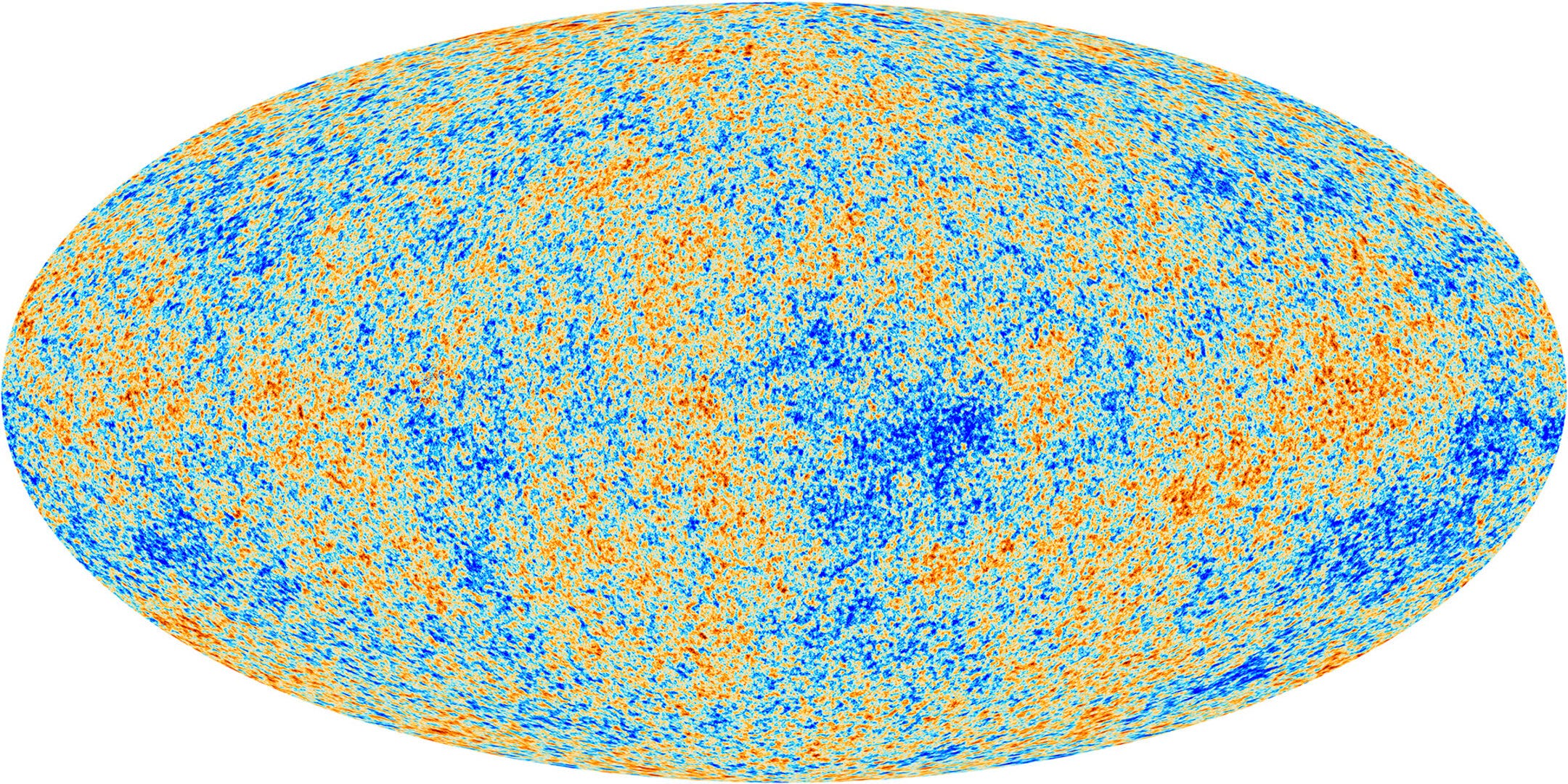
The paradox assumes a clock that started ticking 13.8 billion years ago, and that life had to emerge, evolve, develop technology, and reach us within that window. But cosmology is increasingly moving toward models where the universe didn’t just pop into existence once. Roger Penrose’s Conformal Cyclic Cosmology (CCC), first laid out in his 2010 book Cycles of Time, proposes that the universe iterates through infinite cycles, each “aeon” beginning with a Big Bang and expanding indefinitely, with the far future of one aeon becoming the Big Bang of the next through conformal rescaling. This isn’t a dusty old theory either. Penrose and Krzysztof Meissner published a new paper refining the physics of CCC as recently as March 2025 (arXiv: 2503.24263), introducing the concept of a “gravitational wave epoch” to explain how transitions between aeons could work physically.
CCC is far from the only model pointing in this direction. Paul Steinhardt at Princeton and Neil Turok at Cambridge proposed their own cyclic model in a landmark 2002 paper in Science, describing a universe that undergoes an endless sequence of cosmic epochs, each beginning with a bang and ending in a crunch, with temperature and density remaining finite at each transition. Their ekpyrotic cyclic model, rooted in M-theory and brane cosmology, reproduces the successful predictions of standard Big Bang and inflationary cosmology while eliminating the need for a singular beginning. Steinhardt has continued developing bouncing cosmology models through the present, including work demonstrating that the entropy problems which plagued earlier cyclic theories can be resolved.
These aren’t fringe ideas from internet forums. These are frameworks developed by a Nobel laureate and some of the most accomplished theoretical physicists alive, published in peer-reviewed journals and actively refined over decades. They face real challenges, Penrose himself admits there’s no observational evidence for the mass-decay his model requires, and a 2020 analysis found his claimed CMB signatures were consistent with standard inflationary predictions. Fair criticisms. But the theoretical momentum is real, and the standard inflationary model’s dominance doesn’t make it the final word.
If time is infinite, the entire calculus of the Fermi Paradox changes. You don’t need to squeeze abiogenesis, evolution, technological development, and interstellar travel into a 13.8 billion year window. In an infinite system, anything with a non-zero probability doesn’t just happen once, it happens an incomprehensible number of times. Some will counter that the bottleneck isn’t time but rarity, that abiogenesis might be so improbable that even infinite time doesn’t guarantee life shows up near us. But that objection misses something: you don’t need density. You need one civilization, anywhere, at any point in infinite time, to reach the technological threshold where distance becomes trivial. Once traversal is solved, the sparse distribution of life stops being a barrier. And in an infinite system, that happening at least once isn’t a question of probability, it’s a certainty.
A hot tub in the ocean

There’s a quiet arrogance running through the whole Fermi conversation that nobody really addresses, and it’s quantifiable.
In 2018, Jason Wright at Penn State, along with Shubham Kanodia and Emily Lubar, published a paper in The Astronomical Journal that put hard numbers on how much of the “cosmic haystack” SETI has actually searched. They built an eight-dimensional model accounting for spatial volume, frequency range, bandwidth, signal repetition, polarization, modulation, and sensitivity. The result: we’ve searched the equivalent of about 7,700 liters of seawater out of Earth’s total ocean volume of 1.335 billion trillion liters. That’s a hot tub’s worth of water out of all the oceans on the planet. As Wright himself put it, if you scooped a random hot tub’s worth of water out of the ocean and found no fish, you wouldn’t conclude the ocean was lifeless.
SETI pioneer Jill Tarter had estimated in 2010 that the fraction was even smaller, equivalent to a single drinking glass. Wright’s updated figure was larger thanks to newer programs like Breakthrough Listen, but the conclusion was the same: we have barely started. Wright’s team went further, noting that the galaxy could be filled with more transmitters than stars and we wouldn’t have found them yet given our current search coverage. We’re drawing sweeping conclusions from the thinnest possible dataset.
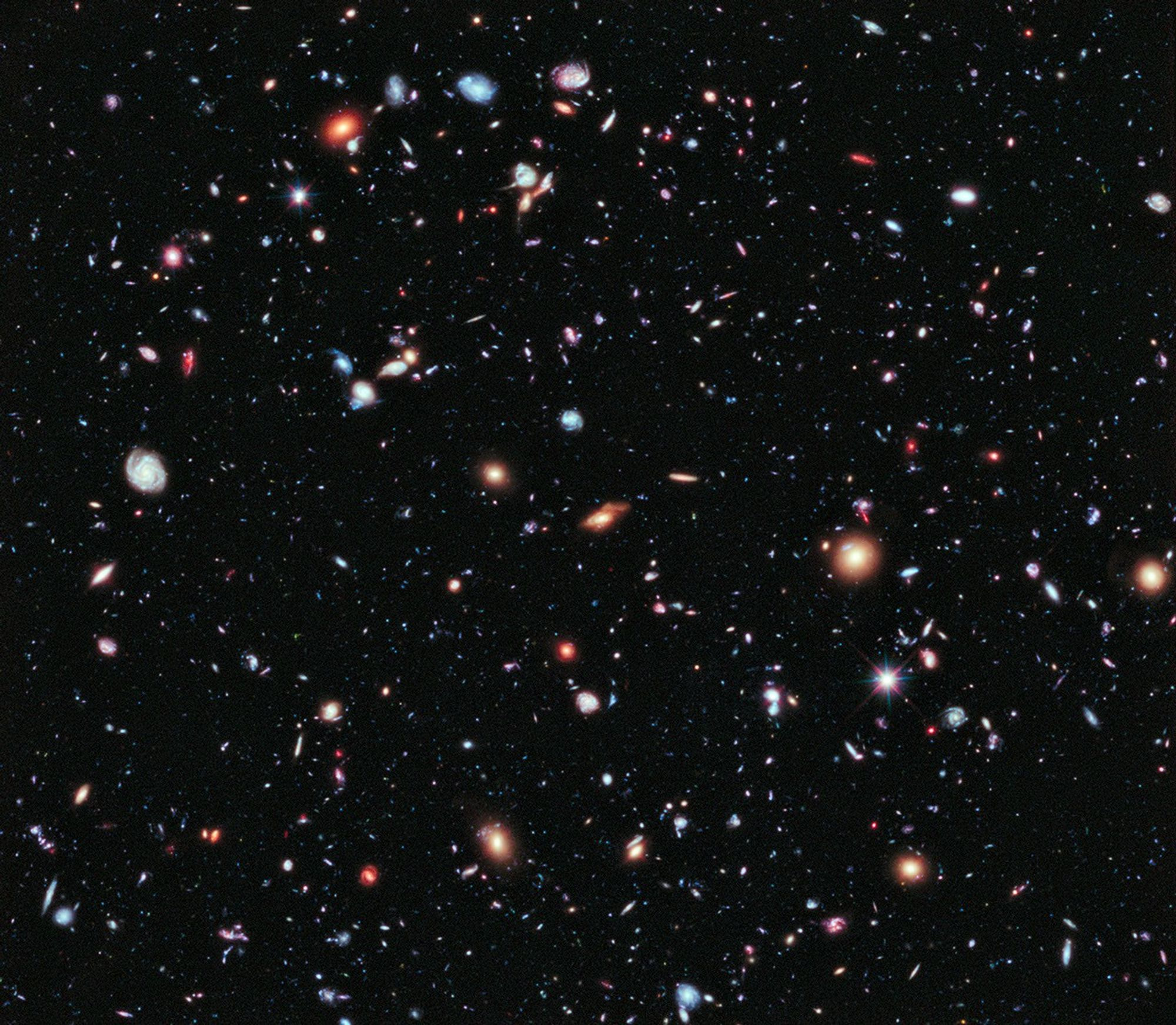
And the raw ingredients for life aren’t rare at all. As of March 2026, NASA’s Exoplanet Archive lists over 6,150 confirmed exoplanets. Current estimates suggest about 1 in 5 Sun-like stars has an Earth-sized planet in the habitable zone. Scale that across the roughly 200 billion stars in the Milky Way and you get an estimated 11 billion potentially habitable Earth-sized planets, rising to 40 billion if you include those orbiting red dwarfs. That’s one galaxy. There are an estimated 2 trillion galaxies in the observable universe. And those numbers only account for life as we understand it, on planets like ours, around stars like ours.
The pattern nobody can explain away
Everything above is grounded in hard data. What follows is a probabilistic case built on something softer but, I’d argue, no less significant: the cross-cultural record. I’ll be upfront about the fact that I’m making an educated leap here.
Jacques Vallée is probably the most important thinker on this subject that most people haven’t heard of. He co-developed the first computerized map of Mars for NASA, helped build ARPANET (the precursor to the internet), and spent decades as a serious scientific researcher before turning his attention to the UFO phenomenon. He inspired the French scientist character in Spielberg’s Close Encounters of the Third Kind. He’s not a crank.
In his 1969 book Passport to Magonia, Vallée did something nobody had done before. He systematically compared modern UFO encounter reports with historical accounts of anomalous aerial phenomena and entity contact stretching back centuries. Celtic fairy abductions, medieval demon encounters, angelic visitations, and modern alien contact reports, he found they share structural similarities that are difficult to dismiss as coincidence: the missing time, the paralysis, the beings arriving from above, the reproductive elements. The same basic story, told across cultures that had no contact with each other, separated by thousands of miles and thousands of years.
Vallée’s conclusion was that the phenomenon extends throughout recorded human history, and that treating UFOs as a purely contemporary, purely technological question misses the point entirely. He argued that whatever people are encountering, it adapts its presentation to the cultural expectations of the observer. Medieval Europeans saw angels and demons. The Vedic texts describe vimanas, flying vehicles with detailed accounts of their capabilities and behavior, across the Rigveda, the Ramayana, and the Mahabharata, texts that predate any modern contamination by centuries. The Aztec and Maya recorded Quetzalcoatl and Kukulkan, feathered serpent gods who descended from the sky. Norse cosmology describes beings traveling between realms via the Bifrost. Every major civilization has some version of this story.
The skeptic says: humans universally look up at the sky, so of course every culture invented sky gods. It’s convergent mythology. And that’s a legitimate position. But consider the probability. Dozens of isolated civilizations, with no shared language, no shared geography, no means of communication, independently fabricating strikingly similar accounts of non-human intelligences arriving from above, often with specific descriptions of craft and technology. At some point, the “coincidence” explanation requires more faith than the alternative.
Vallée wasn’t a believer in the traditional sense. He actually argued against the simple extraterrestrial hypothesis, suggesting the phenomenon might be something stranger, potentially interdimensional, potentially something we don’t have a framework for yet. You don’t have to follow him there. But his core observation stands: something has been showing up throughout human history, and the only thing that changes is how we describe it.
November 14, 2004
If the ancient record is suggestive, the modern record is harder to wave away.
On that date, F/A-18 Super Hornets from the USS Nimitz carrier strike group were redirected from a routine training exercise off the coast of Southern California. The guided-missile cruiser USS Princeton had been tracking anomalous radar returns for days using its AN/SPY-1B radar, one of the most advanced sensor systems in the U.S. Navy. They wanted eyes on the target.
What Commander David Fravor found was a smooth, white, wingless object roughly 40 feet long, hovering above a churning patch of ocean. It had no visible propulsion, no wings, no exhaust. When Fravor attempted to intercept, the object accelerated away at speeds that, according to analysis published in Entropy (a peer-reviewed MDPI journal), implied accelerations in the range of thousands of Gs. For context, modern fighter jets can briefly withstand about 9 Gs. A human pilot blacks out around 10.
The encounter wasn’t a single witness squinting at something far away. It was corroborated by the Princeton’s Aegis radar, an E-2C Hawkeye airborne early warning aircraft, infrared video from an ATFLIR targeting pod, and visual confirmation from multiple trained aviators across two separate flights. The object was tracked dropping from 28,000 feet to near sea level in less than a second. After Fravor disengaged, the object appeared at his squadron’s predetermined, classified combat air patrol coordinates, a detail that Senior Chief Operations Specialist Kevin Day noted was almost certainly not coincidental given the probability involved.
The Pentagon formally released the FLIR footage in 2020 and confirmed the encounters depicted real, unidentified phenomena. Commander Fravor testified under oath before the House Oversight Committee in 2023. The case remains classified as “unknown” by the Department of Defense’s All-domain Anomaly Resolution Office, and that matters precisely because AARO has resolved the majority of its other cases as prosaic, birds, balloons, drones, sensor artifacts. Nimitz survived that filter.
You can dismiss one witness. You can question one sensor. But when radar, infrared, visual observation, and multiple independent military platforms all confirm the same object performing maneuvers that violate known physics, “it was probably a balloon” stops being a serious answer.
The educated leap
I want to be direct about what I’m arguing and where the evidence stops.
None of the above constitutes proof that intelligent life has visited Earth. I acknowledge that. Each line of evidence has its own weaknesses and its own skeptical counterarguments, and those counterarguments deserve respect. But four independent threads, cosmology, search theory, anthropology, and military sensor data, all point in the same direction, from completely different domains of inquiry, without any coordination between them. That convergence means something. Dismissing it because the conclusion makes us uncomfortable would be the real intellectual failure.
That’s the Fermi Fallacy. The mistake is treating our current inability to find something as meaningful data about whether it exists. We’ve confused our limitations with the universe’s emptiness, and we’ve built an entire intellectual framework on that confusion. Sixty years of scanning a hot tub’s worth of ocean, across a sliver of the electromagnetic spectrum, and we’ve concluded the water is empty.
The real question was never “where is everyone?” The real question is whether we’ve been paying attention at all.
Sources
Penrose, R. Cycles of Time: An Extraordinary New View of the Universe (Bodley Head, 2010)
Meissner, K.A. & Penrose, R. “The Physics of Conformal Cyclic Cosmology,” arXiv:2503.24263 (March 2025)
An, D., Meissner, K.A., Nurowski, P. & Penrose, R. “Apparent evidence for Hawking points in the CMB Sky,” arXiv:1808.01740 (2018)
Steinhardt, P.J. & Turok, N. “A Cyclic Model of the Universe,” Science 296, 1436-1439 (2002)
Carroll, S. “Penrose’s Cyclic Cosmology,” Preposterous Universe (2010)
Wright, J.T., Kanodia, S. & Lubar, E. “How Much SETI Has Been Done? Finding Needles in the n-Dimensional Cosmic Haystack,” The Astronomical Journal 156, 260 (2018)
Tarter, J.C. et al. “The First SETI Observations with the Allen Telescope Array,” Acta Astronautica 68, 340-346 (2010)
NASA Exoplanet Archive, confirmed planet count of 6,150+ as of March 2026 (exoplanetarchive.ipac.caltech.edu)
Petigura, E.A., Howard, A.W. & Marcy, G.W. “Prevalence of Earth-size planets orbiting Sun-like stars,” PNAS 110, 19273-19278 (2013)
Vallée, J. Passport to Magonia: From Folklore to Flying Saucers (Henry Regnery, 1969)
Vallée, J. “Five Arguments Against the Extraterrestrial Origin of Unidentified Flying Objects,” Journal of Scientific Exploration 4, No. 1 (1990)
Knuth, K.H., Powell, R.M. & Reali, P.A. “Estimating Flight Characteristics of Anomalous Unidentified Aerial Vehicles,” Entropy 21, 939 (2019)
Scientific Coalition for UAP Studies, “2004 Nimitz Tic Tac Incident: An In-Depth Analysis” (2021)
U.S. Department of Defense, UAP Video Release Statement (April 2020)
Fravor, D. Testimony before U.S. House Committee on Oversight and Accountability (July 2023)
Fascinating!
Some questions that came to mind:
How does Penrose's CCC relate to the ancient Buddhist and Hindu notion of Kalpas, immeasurably long cycles of universe creation and destruction?
Suppose there is an intelligence that is 500 million years older than us, and that has achieved type Omega-minus Barrow scale ("anti-Kardashev") capabilities. How would we recognize it? Could we even conceive of it?
Thank you!