
From Conspiracy to Colony
What Lunar Life Will Actually Look Like

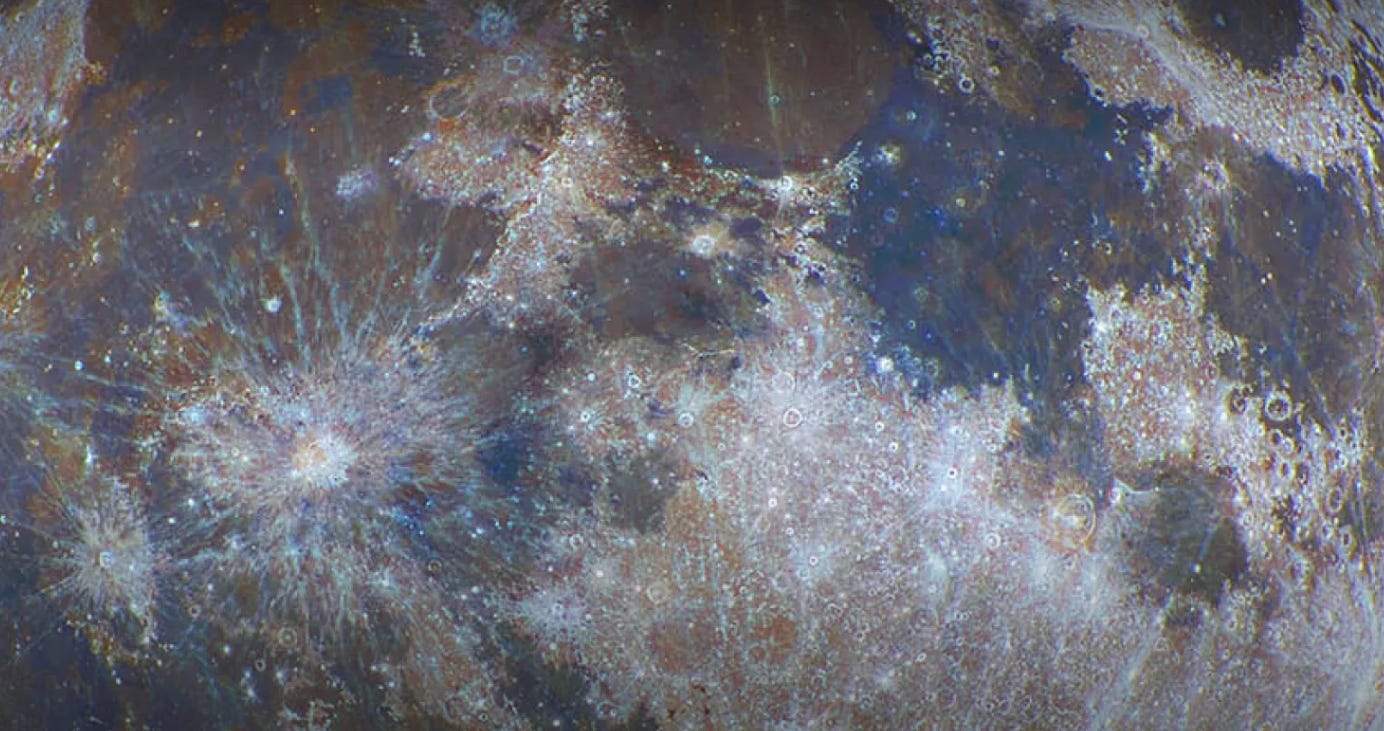
About 6% of Americans think the Moon landings were faked. That number’s been stable for decades. The conspiracy doesn’t survive because the evidence is weak. It survives because the experience is inaccessible. Nobody questions whether planes fly because millions of people board them every day. Only twelve humans ever walked on the Moon, and the last one did it in 1972. The conspiracy has an expiry date, and it’s the same date that permanent lunar habitation begins.
But the process that kills the conspiracy sets something much stranger in motion. Because we won’t just visit again. We’ll stay. And within a few generations of staying, the people born there physically won’t be able to come home.
That’s the part nobody’s really reckoning with yet.
The infrastructure is already being built
The return isn’t aspirational. NASA’s Artemis program and China’s International Lunar Research Station program are both targeting the lunar south pole for permanent infrastructure. The south pole specifically because permanently shadowed craters there contain water ice at concentrations between 0.3% and 5.6% by mass. Water splits into hydrogen and oxygen. Oxygen keeps people alive. Hydrogen and oxygen together make rocket propellant. A colony that produces its own propellant stops paying to lift fuel from Earth, and that changes the economics of everything.
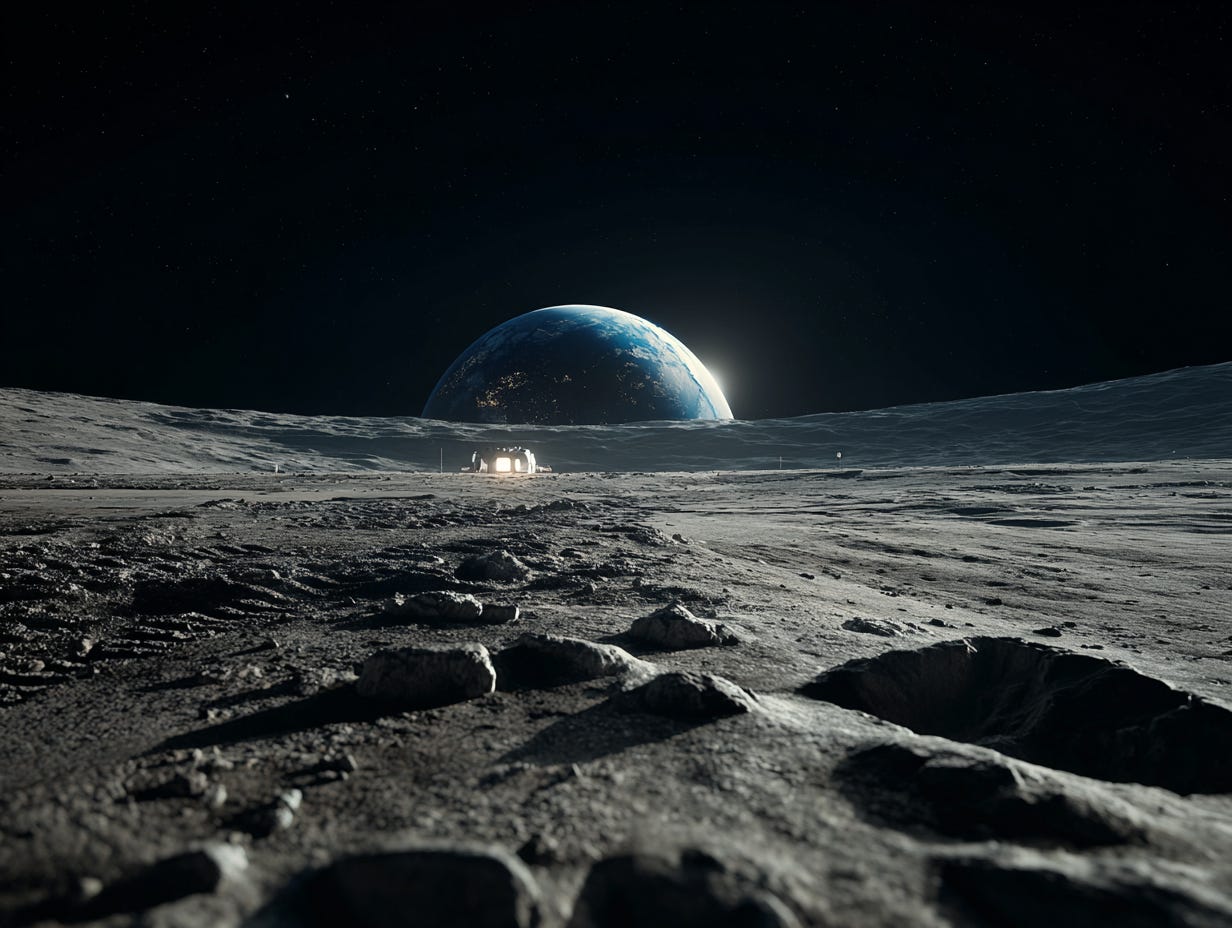
The first outposts will look like Antarctic research stations, not science fiction. Prefabricated modules, inflatable pressure vessels, rotating specialist crews. Two problems dominate the engineering: power and construction.
Power first. A lunar night lasts 14 Earth days. Battery storage at that scale is impractical. The answer is nuclear fission, and in January 2026 NASA and the Department of Energy signed a memorandum of understanding to deploy a fission surface power system on the Moon by 2030. The target spec is 40 kilowatts continuous, under six metric tonnes, ten years without refueling. Without nuclear power you’re limited to the handful of ridges that get near-constant sunlight, and that’s a campsite, not a colony.
Construction second. Every kilogram shipped from Earth costs thousands of dollars. So you build with lunar regolith, the broken rock and dust covering the surface. ICON holds a $57.2 million NASA contract for its Olympus 3D printing system that extrudes melted regolith into ceramic structures. China’s Deep Space Exploration Laboratory has demonstrated 3D printing using actual lunar soil returned by Chang’E-5 as the sole building material, no Earth-sourced additives at all. The vision is robotic construction systems landing before humans arrive, printing radiation shielding, landing pads, and habitat structures from local dirt. The technology exists at lab scale. Making it work autonomously in vacuum across a 300C temperature swing is hard, but it’s engineering-hard, not physics-hard. That distinction matters because engineering problems yield to funding and iteration. Physics problems don’t care how much money you have.
What daily life actually looks like
Skip forward to a lunar settlement circa 2055. Not a city, not a dome, something more like an industrial mining town where the walls are the only thing between you and instant death.
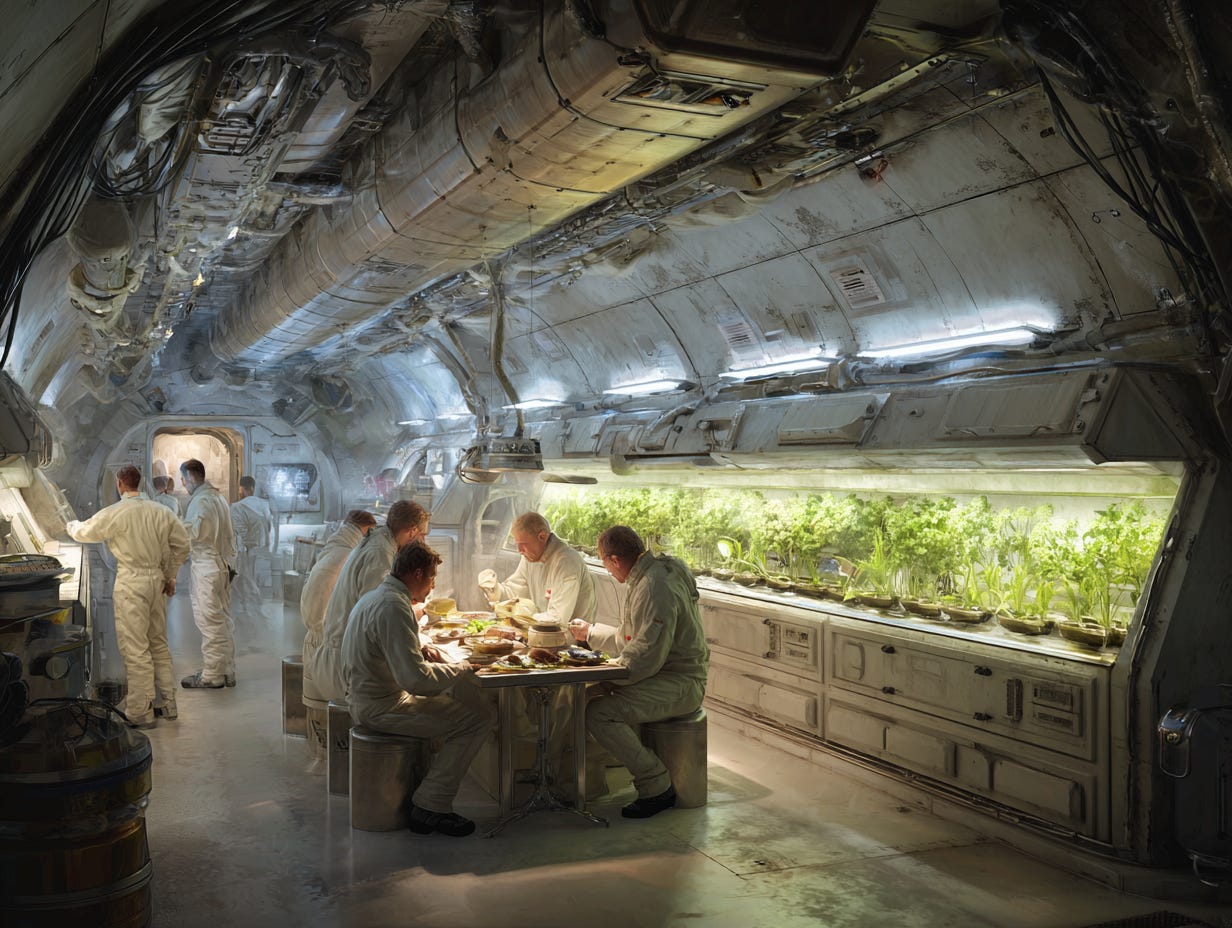
The habitat is partially underground. Two meters of packed regolith reduces cosmic ray and solar particle radiation to Earth-comparable levels. The cheapest approach is building in shallow trenches or lava tubes, natural tunnels formed by ancient volcanic activity, some hundreds of meters wide, and piling regolith on top. Interior pressure runs at about 70 kPa, roughly equivalent to living at 2,400 meters altitude on Earth, a deliberate compromise that reduces structural stress and decompression risk.
Temperature management is a constant fight. The surface swings from +120C in sunlight to -170C in shadow. Habitats use multi-layer insulation, regolith thermal mass, and phase-change materials embedded in walls that passively buffer temperature swings by absorbing and releasing energy as they shift between solid and liquid states.
Food is partially local. Hydroponic chambers lit by LEDs powered by the reactor produce fresh vegetables and herbs. Caloric staples still get shipped from Earth in the early decades because full food self-sufficiency requires enormous growing area and nutrient cycling infrastructure that takes generations to establish. Water is everything, extracted from polar ice and recycled at above 98% efficiency, every drop cycling through drinking, washing, irrigation, humidity control, electrolysis for oxygen, and waste processing before being recovered.
Communication with Earth has a 2.6-second round-trip delay. Manageable for conversation, too slow for real-time remote control, which is why lunar operations need increasing autonomy.
The workday is resource extraction, system maintenance, and science. Leisure is constrained by space and mass but transformed by gravity. A person who jumps 30 centimeters on Earth clears nearly 2 meters on the Moon. Sports invented there will make no sense to anyone watching from Earth.
The psychological environment is something to consider. The settlement is a closed system. Everyone knows everyone. Privacy is limited. The view is magnificent but unchanging. The nearest help in a catastrophic failure is three days away by spacecraft. The psychological profile mirrors submarine crews and Antarctic winter-over teams: tolerance for confinement, ability to manage conflict in small groups, comfort with routine, resilience under chronic stress. Except submarines deploy for months. Lunar colonists live this way permanently.

The generation that can’t come home
Everything we know about reduced gravity and human bodies comes from decades of microgravity research on space stations plus the Apollo missions, where the longest surface stay was three days. In zero-g, bone density drops at 1-1.5% per month. Muscle mass can decrease 20% in a single month, strength by 30%. The heart shrinks. Fluid redistributes toward the head causing vision problems. The immune system weakens. All of this despite two-plus hours of daily exercise.
Lunar gravity at 0.16g isn’t zero. It provides some mechanical loading. But research strongly suggests it’s nowhere near enough to maintain Earth-normal function long-term. Partial gravity simulations in rodents show significant bone and muscle loss even at 0.16g. Space medicine researchers predict lunar gravity provides maybe 15-25% of the protective benefit of full Earth gravity.
For rotating astronauts on six-to-twelve-month tours, this is manageable. Exercise countermeasures mitigate the worst of it. You come home, rehabilitate, recover.
For permanent residents, the calculus changes. For people born there, it changes completely.
A human who develops from infancy in 1/6 gravity will have a fundamentally different body. Bone formation, muscle development, cardiovascular conditioning, vestibular calibration, neurological development... all of it responds to the gravitational environment during growth. The developing skeleton grows thicker and denser where mechanical stress demands it. In 1/6g the demand is dramatically reduced.
A lunar-born child will likely develop lighter bones, a smaller heart, lower blood pressure, different muscle mass distribution, and a vestibular system calibrated to an environment where “down” pulls with a fraction of terrestrial force. They may grow taller as the spine experiences less compression.
These aren’t diseases. They’re adaptations. The body optimizing for its environment.
But they create a one-way door.
A lunar-born adult visiting Earth would experience 1g as crushing. Bones adapted for 1/6 loading would fracture. A cardiovascular system sized for a fraction of Earth’s gravity would struggle to maintain blood flow to the brain while standing. Muscles developed for moving a body that effectively weighs 1/6 of its Earth-equivalent mass would be totally inadequate.
The first generation of lunar-born humans may be physically unable to visit Earth. This isn’t speculation, it’s direct extrapolation from known physiology. The only uncertainty is degree, not existence.
And once that door closes, everything changes.
When you can’t go home, you stop calling somewhere else home
Biological divergence across populations is measured in centuries and millennia. Speciation, meaning reproductive incompatibility, takes tens of thousands of years minimum. But phenotypic divergence, populations that look, move, and function differently, begins within a single generation.
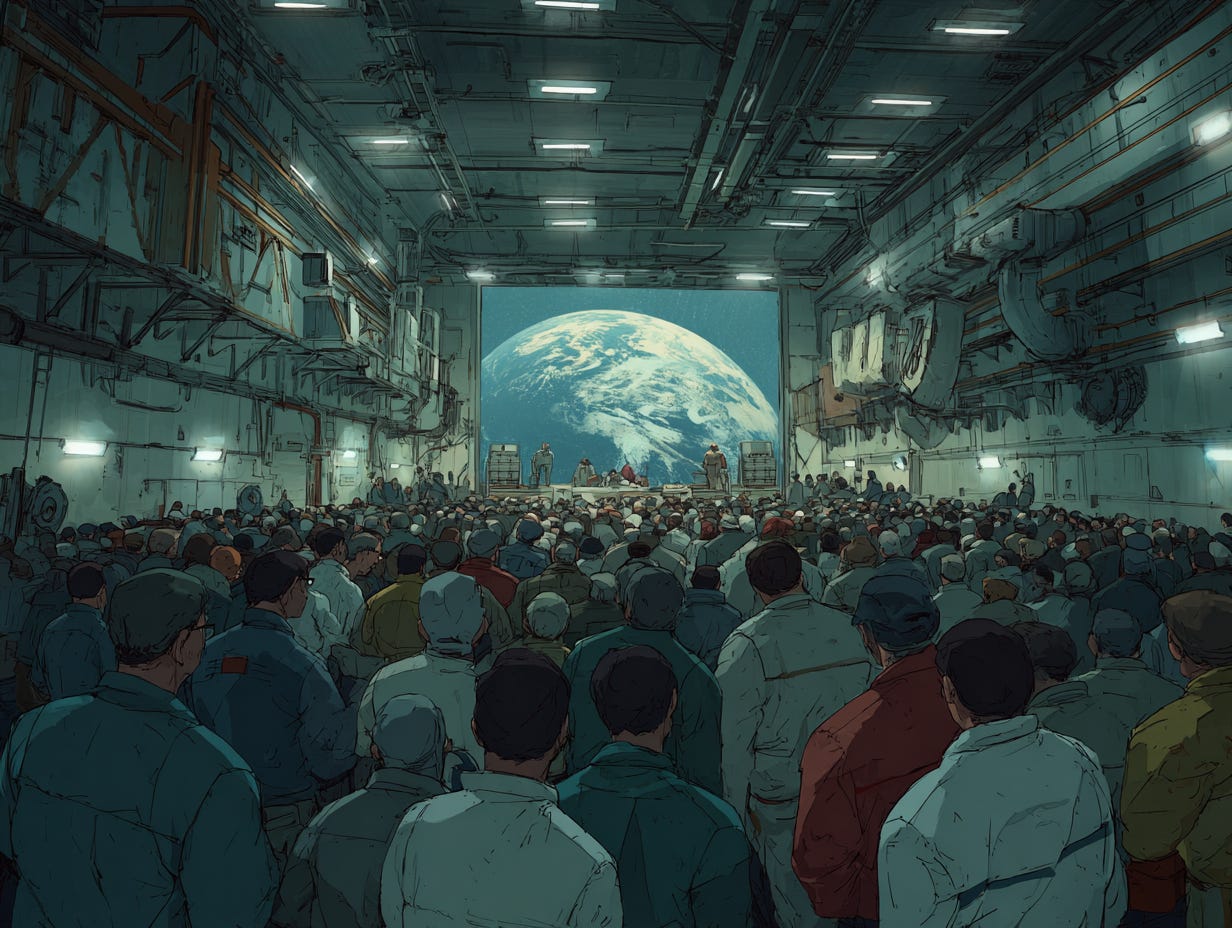
Over centuries, if the lunar population breeds primarily within itself, several pressures act simultaneously. Selection favors enhanced DNA repair mechanisms against higher background radiation. Metabolically efficient musculoskeletal systems optimized for 1/6g replace heavy Earth-adapted bones that serve no purpose. Cardiovascular systems trend toward configurations built for lower gravitational loading. If habitats maintain slightly different atmospheric compositions, respiratory systems adapt.
None of these individually constitute speciation. Cumulatively over centuries they produce human populations that are recognizably different from Earth humans. Taller, leaner, lighter-boned, with different cardiovascular parameters and different radiation tolerance. Still human, but a different kind of human.
Cultural divergence happens much faster.
Lunar residents will share an experience no Earth human has ever had, living where the habitat is the only thing between you and vacuum. Step outside without a suit and you have roughly 15 seconds of useful consciousness. This shapes everything about how a society organizes itself.
Collective responsibility becomes non-negotiable. On Earth, individualism works because the environment is forgiving. One person’s recklessness rarely kills a community. On the Moon, one person damaging a seal or contaminating the water supply can kill everyone. This produces a fundamentally different relationship between individual freedom and collective obligation, something closer to a submarine crew’s culture, except permanent.
Resource consciousness becomes instinctive. Every liter of water, every watt of power, every gram of food has a known finite cost. Waste is an existential threat. Conspicuous consumption becomes incomprehensible rather than just wasteful.
Language drifts. Isolated populations develop distinct vocabularies and dialects within decades. Lunar colonists will coin words for experiences that have no Earth equivalent, the particular quality of motion in 1/6 gravity, the visual experience of Earth in the sky. Within a few generations “Lunar English” or whatever the dominant settlement language is will be a recognizable variant. Art and music transform. Sound behaves differently in a pressurized habitat. Dance in 1/6 gravity is an entirely new art form. Sports invented on the Moon export back to Earth as incomprehensible spectacles.
And at some point, likely within the first generation born there, identity crystallizes. These people won’t think of themselves as Americans or Chinese or Europeans who happen to live on the Moon. They’ll think of themselves as lunar. That identity will carry shared experience, shared values, shared risk, and increasingly shared biology.
It’ll also carry resentment. And resentment is where it gets political.
The sovereignty question
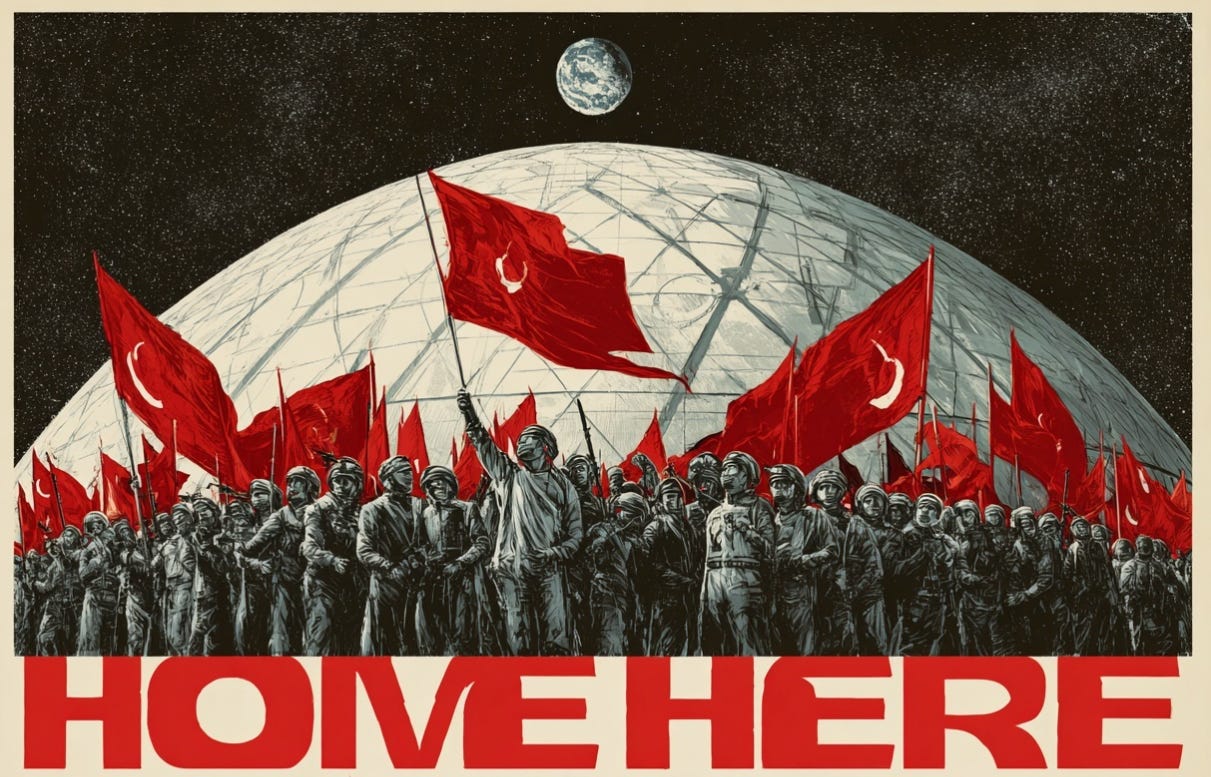
Colonial resentment follows a trajectory so consistent across human history that you can set your watch by it. The colony is established by and for the home country. The colony develops its own structures. The home country continues governing in its own interest. Colonial residents perceive that governance as ignorant, exploitative, illegitimate. The colony demands autonomy.
There’s no reason a lunar colony would be exempt from this pattern. Distance amplifies everything, Earth governors making lunar policy will never have experienced the Moon. They won’t understand the constraints, the culture, the daily reality. Their decisions will be perceived, often correctly, as uninformed and self-serving.
The legal framework is already fracturing before permanent settlement begins.
The Outer Space Treaty of 1967 says outer space “is not subject to national appropriation by claim of sovereignty, by means of use or occupation, or by any other means.” Clear enough. But it was written when the Moon was a destination for brief government science missions, not a place where people live, work, raise families, and extract commercially valuable resources.
The Artemis Accords, signed by over 30 nations, already establish “safety zones” around lunar operations. Explicitly not sovereignty claims. But in practice they function as exclusive operational areas where one nation’s activities take priority. The gap between “safety zone” and “territorial claim” gets thinner every year those zones stay occupied and nobody challenges them. The US legalized space mining under domestic law in 2015. China enacted similar provisions. Neither ratified the Moon Agreement of 1979 that tried to declare lunar resources the “common heritage of mankind.” The treaties saying nobody owns the Moon were written when nobody could own the Moon. Now that owning pieces of it is becoming practical, the treaties are being quietly worked around.
Independence movements come down to a simple equation: costs of remaining under external governance versus benefits. For a young lunar colony dependent on Earth for food, parts, and personnel, independence is suicide. You need Earth. You have no leverage.
Self-sufficiency flips that equation.
If the colony produces its own food, water, oxygen, power, and construction materials... if it manufactures critical components locally... if it generates economic value exceeding its imports (propellant production, He-3 mining, scientific output), then the dependency inverts. Earth needs the colony’s output. The colony no longer needs Earth. That’s the inflection point, and every colonial independence movement in history has an equivalent moment where the colony realizes the home country needs them more than they need the home country.
The most interesting wrinkle is that lunar independence might not involve a single colonial power. If the Moon hosts settlements from the US, China, the EU, and private corporations simultaneously, the independence movement could unite disparate settlements against all their respective home countries at once. A unified lunar polity from multi-national origins, forged by shared environment rather than shared nationality. That would actually be unprecedented in human history.
What we don’t know
The biggest unknown could break the entire thesis: nobody knows if human reproduction works in 1/6 gravity. No mammal has ever been conceived, gestated, and born in reduced gravity. If humans can’t reproduce on the Moon, everything from the biology section onward collapses. No lunar-born generation, no divergence, no distinct identity, just rotating Earth visitors. This is the most important question in the entire colonization discussion and we have zero data on it.
The ISRU scaling gap is real. Lab demonstrations and autonomous industrial-scale lunar operations are separated by an engineering chasm that could take decades to close. Closed-loop life support for decades is unproven. Multi-generational psychology in permanent confinement is completely uncharted. Political will across decades of changing governments is never guaranteed.
The honest read is that lunar colonization is physically possible, technologically plausible this century, and consistent with every pattern of human expansion on record. Whether it happens depends on economics, politics, and answering unknowns we haven’t even designed the experiments for yet.
But we always do it. Every time we can, we do. The conspiracy theorists who say we never went have the story exactly backwards. The Moon landings weren’t the end of anything. They were the first sentence of a story that ends with humanity becoming something the people who watched Apollo 11 could never have imagined.
We went. We’ll go back. We’ll stay. And staying will change what it means to be us.