
Boots on the Ground in Iran
Why the US is Preparing to Invade Iran and Why It Won't End the Way Anyone Thinks

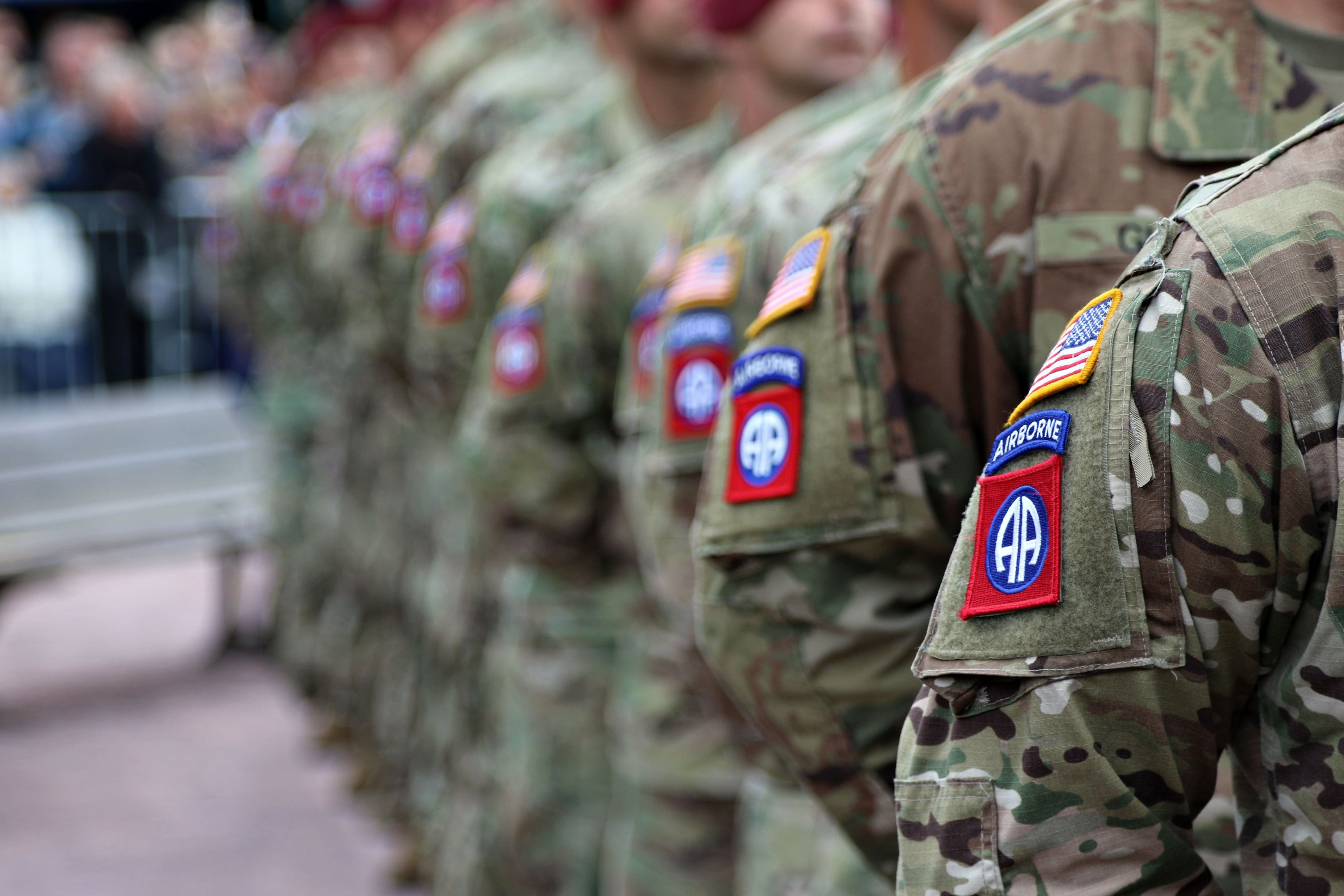
As of March 26th 2026, the United States has ordered elements of the 82nd Airborne Division, roughly 1,000 soldiers including division commander Maj. Gen. Brandon Tegtmeier and his headquarters staff, to deploy to the Middle East. Two Marine Expeditionary Units are already moving toward the Persian Gulf, carrying several thousand Marines along with amphibious warships, aviation assets and landing craft. Combined, that puts somewhere between 6,000 and 8,000 US ground troops in close proximity to Iran.
The Pentagon says this is hypothetical. Nobody is calling it a ground invasion. But when you deploy a division-level command element alongside two MEUs into an active theatre where the primary target has already been bombed and the enemy has rejected your ceasefire terms... that’s pre-positioning. The White House describes ground operations as “hypothetical” while simultaneously deploying the exact force structure you’d need to execute them.
This piece is an assessment of what’s coming, what it’s likely to look like, and why every scenario ends with the US deeper in the Middle East than at any point since 2003. I’m putting rough probabilities on each outcome because vague analysis is useless when the decisions are being made this week.
440.9 Kilograms
The whole war traces back to one number.
That’s how much uranium enriched to 60% purity the IAEA estimates Iran had before the June 2025 strikes. At 60%, roughly 99% of the enrichment work is already done, the step to weapons-grade 90% is short. According to the IAEA’s own calculations, that stockpile could produce fuel for approximately nine nuclear weapons. A single cascade of 175 IR-6 centrifuges could produce enough weapons-grade material for one bomb every 25 days.
The problem is nobody knows where all of it is, and nobody can verify its status. IAEA chief Rafael Grossi says about 200kg was stored in a tunnel complex at Isfahan, and the agency believes it’s probably still there based on satellite imagery showing the tunnels were largely undamaged by last June’s strikes. But the IAEA hasn’t had access to any of Iran’s four declared enrichment facilities for over eight months. Iran sealed two of the three tunnel entrances at Isfahan with massive earth barriers. The third was reinforced with protective walls designed to stop cruise missiles.
A New York Times report from earlier this month found that US intelligence agencies believe there’s now a “very narrow access point” through which the uranium could potentially be retrieved. If the material is accessible it can be moved, and if it can be moved it can be weaponised. The Pentagon has prepared plans for ground operations deep inside Iran to secure it, according to Axios. The alternative is large-scale air strikes to bury it permanently, but nobody can confirm that would work.
Both Tel Aviv and Washington have listed ending Iran’s nuclear capability as a primary war aim. The uranium is the one piece that conventional strikes can’t cleanly resolve, and it’s the reason we’re talking about ground troops at all.
Kharg Island: 90% of Everything
The most likely ground operation isn’t a march on Tehran. It’s the seizure of Kharg Island, a 5-mile strip of land in the northern Persian Gulf that handles 90% of Iran’s crude oil exports. Trump has called it Iran’s “crown jewel” and the US hit 90 targets there on March 13th, striking naval mine storage, missile bunkers, and military sites while deliberately avoiding the oil infrastructure.
The logic is coercive rather than destructive. Seize Kharg and you remove Iran’s ability to export oil, which cuts the regime’s primary revenue stream and creates pressure to force the Strait of Hormuz back open. Pipeline networks from Iran’s major onshore oil fields terminate at Kharg, so controlling the island severs the final link between production and international markets without requiring deep strikes into the Iranian mainland. Deep surrounding waters allow supertankers to dock directly, meaning short-term disruption would produce immediate effects on global supply.
The operational concept, based on reporting from CNN, Stars and Stripes, and multiple military analysts, would work in phases. Marines from the MEUs conduct the initial amphibious assault, securing beachheads and key terrain. Marine combat engineers repair damaged airfields. Once the lodgement is secure, 82nd Airborne elements reinforce by air, flying in via Ospreys and helicopters. Retired Admiral James Stavridis, former NATO Supreme Allied Commander, outlined this sequence in a Bloomberg op-ed, noting that Iranian ground forces remaining after pre-assault strikes should be “easily overcome” by the first waves.
That assumes things go to plan, and things almost never go to plan.
What the Optimists Are Missing
Iran knows Kharg is a target and has been preparing. CNN reported that US intelligence shows Iran has been laying traps across the island, moving additional military personnel, and deploying MANPAD shoulder-fired missile systems. Existing defences include HAWK surface-to-air missiles and Oerlikon anti-aircraft guns, though US strikes have degraded some of these. Central Command has near-constant satellite surveillance and has been watching physical and environmental changes in areas that appear booby-trapped.
Retired Lt. Col. Daniel Davis at Defense Priorities made the force size point clearly: the deployment is “not sufficient for a major invasion nor to hold a single city” and signals “limited/targeted ops only.” The 82nd Airborne is an immediate reaction force, built for speed and surprise, not sustained occupation. It seizes things quickly and then needs something bigger behind it.
But the real problem isn’t taking Kharg, it’s what happens after. An Israeli source told CNN there’s concern that seizing the island triggers attacks by Iranian drones and shoulder-fired missiles resulting in American casualties. Gulf allies are privately urging Washington against the operation, warning it would provoke Iranian retaliation against their infrastructure and prolong the conflict.
That concern is grounded in precedent. In 2019, drone and cruise missile strikes hit Saudi Aramco’s Abqaiq facility and knocked out 5.7 million barrels per day of Saudi output, roughly half their production, in a single peacetime attack. Now imagine that capability deployed against Ras Tanura, Jubail, or Qatar’s LNG terminals during an active war where Iran has nothing left to lose. Iran’s parliamentary speaker, Mohammad Bagher Ghalibaf, already warned on X that “all the vital infrastructure of that regional country will be targeted without limitation.”
Then there’s China. Nearly 38% of crude flowing through Hormuz goes to China. If the US seizes the island that handles 90% of Iranian exports, China doesn’t just lose a supplier, it watches Washington physically control a chokepoint in its energy supply chain. Beijing hasn’t intervened militarily but China’s top diplomat Wang Yi has already told Iran that “talking is always better than fighting.” A Kharg seizure would test how far China’s restraint extends.
The Human Cost Nobody is Counting
Twenty-seven days in, the numbers are staggering and incomplete.
Al Jazeera’s live tracker puts Iranian deaths at 1,937 as of March 26th. The human rights organisation Hengaw, which has been documenting casualties through field sources across Iran, puts the total at over 6,500 killed in 25 days, including at least 640 civilians. HRANA, another rights group, confirmed 1,407 civilian deaths in the first three weeks including 214 children. Iran’s own health ministry reported roughly 210 children killed and more than 1,500 under-18s injured. Over 300 health and emergency facilities have been damaged.
Thirteen US service members have died. Around 200 more have been wounded. In Lebanon, where Israel launched a ground invasion on March 17th, at least 1,072 people have been killed and 2,966 wounded. At least 25 people have been killed across Gulf states from Iranian retaliatory strikes.
The UN human rights chief has said that US and Israeli strikes are hitting homes, hospitals, schools, and cultural sites. Hengaw documented that Iranian military forces have relocated into civilian spaces including schools and mosques, placing civilians at direct risk. The UN estimates the war has caused $63 billion in economic losses across the Arab region. Cities across Iran have become ghost towns. Schools are closed. Prisoners in Evin Prison are reportedly receiving limited bread and water.
These numbers will continue to climb regardless of which military option the Pentagon chooses, and a ground operation on Kharg would add American names to the casualty lists.
The Diplomatic Situation is Worse Than It Looks
While the Pentagon pre-positions ground forces, the White House insists productive talks are happening. Iran says there are no talks and calls the claim a ruse for military planning. The reality appears to be somewhere between: Iran responded to a 15-point US proposal through unnamed intermediaries (Pakistan, according to Pakistani officials) and is awaiting Washington’s reply, according to Iran’s Tasnim news agency. But Iran’s Foreign Minister Araghchi also said Tehran will continue its “resistance” and does not intend to negotiate while being bombed.
Iran’s five conditions for a ceasefire: end to aggression, concrete guarantees against future war, war reparations, a comprehensive end across all fronts including against Hezbollah and Houthis, and recognition of Iranian sovereignty over the Strait of Hormuz.
The gap between these positions is enormous. The US wants the nuclear programme gone and Hormuz reopened. Iran wants reparations and sovereignty guarantees. Pakistan, Egypt, and Turkey are trying to organise direct talks. The IRGC is reportedly deeply sceptical. Meanwhile, Israel’s UN Ambassador said Israel isn’t even part of the US-Iran talks and that military operations will continue until Iran’s nuclear and missile capabilities are eliminated.
Congress doesn’t know the plan. House Armed Services Chairman Mike Rogers emerged from a classified briefing Wednesday saying “We’re just not getting enough answers.” Senate Armed Services Chairman Roger Wicker agreed. When Congress can’t get clarity, the plan is still being written, or the plan is to not have a plan.
How This Plays Out
Based on everything reported, here are the scenarios and my rough probability estimates:
Expanded air strikes on Iranian power plants and energy infrastructure (next 7-10 days): 70%. Trump already threatened this and Iran has already promised massive retaliation across the Gulf in response. This is the most likely next escalation step and it would intensify the humanitarian crisis dramatically while probably not reopening Hormuz.
Kharg Island seizure (within 2-4 weeks if diplomacy stalls): 40%. The force structure is being assembled for exactly this operation. Gulf allies are pushing against it. The risk of American casualties and Iranian retaliation against Gulf infrastructure is high. But if the strait stays closed and there’s no diplomatic breakthrough, the pressure to “do something” will be immense and Kharg is the obvious target.
Isfahan uranium ground operation: 10-15%. This is far more complex and dangerous than Kharg, requiring sustained ground presence deep inside Iran that the current force can’t support. More likely the US relies on further air strikes to deny access permanently rather than attempting to physically secure the material. But it remains on the table according to Axios, and the unaccounted uranium is the one variable that could push decision-makers toward extreme options.
Full-scale land invasion of mainland Iran: under 5%. Every military expert quoted says the force is too small, the terrain is too hostile, and the precedent (Afghanistan, Iraq) is too recent. Iran has 90 million people and is half mountainous. The 82nd Airborne’s motto is “All the Way” but even the Pentagon knows where “all the way” ends in a country three times the size of Afghanistan.
Diplomatic resolution within 30 days: 15-20%. Both sides have back-channel communication through Pakistan. Iran’s foreign minister offered to downblend enriched uranium on CBS. The outline of a deal exists. But mutual distrust, the IRGC’s scepticism, and the fact that Israel is operating independently of US diplomatic efforts all work against it.
The Iraq Question
Every military expert quoted in the reporting makes the same caveat: this force is built for targeted, short-duration missions. The assumption is go in, seize Kharg, maybe deny the uranium, use the pressure to force a deal.
That assumption requires Iran to respond rationally to the seizure of its most valuable economic asset while being bombed. Minimal US casualties are baked into the plan, which the booby trapping and MANPAD deployments suggest won’t happen. Gulf allies would need to absorb Iranian retaliation without demanding the US withdraw. China would have to watch its energy supply be physically seized without responding. And Trump would need to resist expanding the operation once troops are committed and the news cycle is running.
The country that spent twenty years in Afghanistan and left with nothing to show for it is now contemplating ground operations in a country three times the size, with a population three times as large, far more sophisticated military capability, and terrain that favours guerrilla warfare at every turn. Military analyst Michael Eisenstadt has already warned that Iran could shift to hit-and-run tactics that significantly increase US casualties.
56% of Americans already oppose this war according to an NPR/PBS/Marist poll, and the first ground troops haven’t even landed yet. The US has spent roughly $16.5 billion in the first 12 days alone according to CSIS estimates. The decisions being made this week, about Kharg, about the uranium, about how deep to go, will determine whether this war lasts weeks or years.
Nobody in Washington seems to be asking the question that matters: what does “winning” look like, and is it worth what it costs to get there?
For real-time geopolitical risk analysis and forecasting on the Iran war, Hormuz crisis, and escalation scenarios, visit NexusHQ.
Disclosure: the author holds positions in energy and commodities that may be affected by the events described in this article.